Drivetrain Health: Keeping Your Transmission Smooth Through a Prairie Winter

Winter in Camrose has a way of revealing small vehicle problems before you are ready to deal with them. A transmission that shifts a little harshly in October may hesitate in January. A minor fluid leak can become a serious drivetrain problem after repeated cold starts, snow-covered roads, and long highway drives. The good news is that winter drivetrain care is not complicated. It comes down to using the right fluids, following a sensible routine car maintenance schedule, and paying attention to how your vehicle behaves when temperatures drop. Think of maintenance as health insurance for your vehicle. You are making a manageable investment now to avoid a much larger repair bill: or an inconvenient breakdown: later. Why Cold Weather Works Your Drivetrain Harder Your drivetrain transfers power from the engine to the wheels. Depending on your vehicle, that system may include: The transmission Driveshafts and axles Differentials Transfer cases in many 4×4 vehicles CV joints and U-joints Clutches, gears, bearings, and electronic controls All of these components depend on clean, properly specified lubricants. In deep cold, fluids become thicker and do not circulate as easily. That is similar to pouring cold honey compared with warm syrup: both eventually move, but the colder substance takes more effort to flow. When your vehicle starts at -20°C or colder, the transmission and differential may need more time to reach normal operating temperature. If the fluid is old, contaminated, low, or the wrong viscosity, the drivetrain can experience additional friction and pressure during those first kilometres. That does not mean every winter shift problem requires a transmission replacement. Sometimes the cause is overdue maintenance, a leak, a sensor, or a battery that is struggling to provide stable voltage. A proper inspection helps identify the real issue before assumptions lead to unnecessary repairs. Start With a Seasonal Drivetrain Inspection Before the first major snowfall, have the main drivetrain components checked as part of your seasonal service. This is especially important if you tow, haul, drive gravel roads around Camrose, or use your truck for work. Transmission fluid and leaks Transmission fluid lubricates internal components, helps control heat, and supports hydraulic pressure for smooth gear changes. Over time, it can break down from heat and friction. Contamination from worn clutch material or internal wear can also affect shifting performance. A technician can check for: Low fluid level Discoloured or degraded fluid Leaks around the pan, seals, cooler lines, or connections Delayed engagement when shifting into Drive or Reverse Rough, slipping, or inconsistent gear changes Not every transmission uses the same fluid, and some modern transmissions have specific service procedures. Always follow the vehicle manufacturer’s requirements rather than choosing a fluid based only on colour or general availability. If you do not know when your transmission was last serviced, that is useful information in itself. Your owner’s manual and driving conditions can help determine the right service interval. Frequent short trips, stop-and-go driving, towing, and extreme temperatures may qualify as severe service. Differential and transfer case fluids The transmission is not the only part of the drivetrain that needs lubrication. Differentials allow the wheels to turn at different speeds while cornering, and the transfer case distributes power in many AWD and 4×4 systems. These components can develop leaks around axle seals, covers, and output shafts. A low fluid level may not produce an immediate warning light, but it can leave gears and bearings without the protection they need. During an inspection, ask whether your technician has checked: Differential fluid condition and level Transfer case fluid, if equipped Axle and driveshaft seals CV boots for cracks or grease loss U-joints and driveshaft components Evidence of impact damage or corrosion Fresh, correct-spec fluid is an investment in quiet, reliable power transfer. It is much less expensive than replacing damaged gears or bearings after a preventable lubrication problem. Use Better Cold-Start Habits How you operate your vehicle during the first few minutes of a winter drive matters. If temperatures are well below freezing, use your block heater according to the manufacturer’s recommendations. A block heater helps warm the engine and coolant, making the initial start easier. It does not instantly warm the transmission or differential, but reducing engine strain helps the vehicle reach normal operating temperature more efficiently. After starting: Allow the engine a short period for oil pressure to stabilize. Select Drive or Reverse smoothly rather than immediately accelerating hard. Drive gently for the first several kilometres. Avoid high engine speeds, heavy towing, and aggressive acceleration until the vehicle warms up. Long periods of idling are usually not the best way to warm the entire vehicle. Light driving under controlled conditions allows the engine, transmission, and other drivetrain components to build heat more effectively. Avoid shifting between Drive and Reverse while the vehicle is still moving. That habit can create unnecessary shock through the transmission and driveline. Come to a complete stop, pause briefly, and then select the next gear. Be Gentle on Snow and Ice Wheelspin may feel like a quick way to get unstuck, but it can place a sudden load on axles, differentials, CV joints, and transmission components. When traction returns abruptly, that stored force has to go somewhere. Instead, use steady throttle input and allow your vehicle’s traction control or four-wheel-drive system to work as designed. If you are stuck, rocking the vehicle aggressively between Drive and Reverse can cause damage. Clear snow from around the tires, improve traction with suitable material, and use controlled inputs. For 4×4 systems, make sure you understand when to use each setting. Part-time four-wheel drive should generally be used on loose or slippery surfaces, not dry pavement, unless your owner’s manual says otherwise. Driving in the wrong mode can create drivetrain wind-up, which places stress on components that were not designed to slip during turns. Winter tires also contribute to drivetrain health. Better traction reduces wheelspin and helps the drivetrain deliver power more smoothly. Check tire pressure regularly, since pressure drops as temperatures fall. Do Not Ignore
Maxing Out Your Rig: Essential Performance Upgrades for Alberta Trucks

If you own a truck in Alberta, you already know your vehicle isn’t just a way to get from point A to point B. It’s a mobile office, a heavy-duty workhorse, a weekend towing rig, and sometimes an all-terrain explorer braving unpredictable prairie weather and rugged backroads. From freezing winter mornings in Camrose to scorching summer heat hauling grain or gear, your truck works harder than most. Over time, factory settings are built to be a one-size-fits-all compromise designed for general markets. But your driving conditions demand more. Whether you’re looking to squeeze extra towing power out of your diesel, sharpen your throttle response for highway passing, or protect your suspension from rough lease roads, performance upgrades are less about raw speed and more about unlocking efficiency, longevity, and total peace of mind. At Minotaur Mechanical, we help drivers throughout Camrose and surrounding areas dial in their rigs properly. Let’s break down the most essential truck performance upgrades that deliver real value on Alberta highways and job sites. Why Alberta Trucks Need a Custom Approach Think of your truck’s factory configuration like a pair of off-the-rack boots. They fit most people reasonably well, but they aren’t customized to your exact stride or the terrain you walk on every day. Alberta presents a unique set of stresses for automotive components. Extreme temperature swings put immense thermal shock on engine blocks, coolants, and seals. Gravel highways pit against chassis components, while heavy seasonal towing loads push transmissions and cooling systems to their limits. When you invest in smart, targeted performance upgrades, you aren’t just chasing horsepower numbers on a dyno. You are building health insurance for your drivetrain, reducing strain during heavy hauls, and preventing premature wear and tear that leads to expensive headaches down the road. 1. Engine Tuning and ECM/TCM Calibration If you do only one performance modification to your rig, a quality engine control module (ECM) and transmission control module (TCM) calibration is almost always the best starting point. Your factory computer is programmed with conservative parameters to balance emissions, fuel economy, and varying global fuel qualities. A custom tune optimizes your fuel injection timing, boost control, and air-fuel ratios. Better Drivability: You’ll notice crisper throttle response and smoother power bands, which make merging onto busy highways or navigating steep grades significantly less stressful. Optimized Shift Points: Pairing your engine tune with transmission tuning ensures your gears don’t hunt back and forth under heavy loads, protecting your transmission clutches from excess heat and wear. Tailored Reliability: A reputable technician ensures your tune works harmoniously with your climate, keeping exhaust gas temperatures (EGTs) safe even when working hard in summer heat. For more insights into keeping heavy-duty powerplants healthy, check out our guide on diesel engine maintenance. 2. Improving Airflow: Cold Air Intake and High-Flow Filters An internal combustion engine is essentially a giant air pump. The easier it is for your engine to breathe, the more efficiently it can convert fuel into usable torque. Factory airboxes are often choked down with restrictive baffles designed primarily to keep engine noise to a minimum. Upgrading to a quality cold air intake replaces that restrictive stock box with smoother piping and a high-flow, reusable filter. By drawing in cooler, denser ambient air from outside the engine bay: rather than hot air swirling right above the exhaust manifolds: your engine gets a richer oxygen charge. This results in cleaner combustion, a subtle bump in horsepower, and improved fuel efficiency during steady highway cruising. For drivers traversing dusty grid roads across rural Alberta, a high-quality filter paired with proper servicing keeps abrasive dust out of your cylinders while maximizing airflow. 3. Freeing Up the Exhaust System Once you’ve improved how air enters your engine, you need to make sure it exits just as easily. A restrictive factory exhaust system creates backpressure, forcing your pistons to work harder to push out spent exhaust gases. Installing a performance-oriented, mandrel-bent exhaust system reduces backpressure significantly. On diesel rigs and heavily loaded gas trucks, this upgrade pays immediate dividends: Lower Exhaust Gas Temperatures (EGTs): Keeping EGTs lower when towing uphill protects your turbocharger and exhaust valves from heat fatigue. Enhanced Torque: You will feel a noticeable improvement in low-end pulling power right where you need it when launching from a stop or pulling a heavy trailer. Refined Tone: A quality system gives your truck a deeper, throatier note without obnoxious cabin drone on long drives. 4. Diesel Essentials: Lift Pumps, Intercoolers, and Monitoring If your rig runs on diesel, standard performance upgrades must be paired with system integrity. Diesel engines thrive on clean fuel, cool air, and vigilant monitoring. Upgraded Lift Pumps Many factory diesel fuel supply pumps run right on the edge of their capacity, especially as trucks age. Adding an aftermarket lift pump ensures a constant, air-free supply of pressurized fuel to your injection pump, preventing costly high-pressure fuel pump failures and smoothing out idle and acceleration. Upgraded Intercoolers When your turbocharger compresses air to force it into the engine, that air heats up significantly. Hot air is less dense, which robs power and raises engine temperatures. A heavy-duty, high-efficiency intercooler cools that compressed air down before it enters the intake manifold, preserving maximum power even on sweltering July afternoons. Comprehensive Gauges When you start pushing your truck harder or towing heavy loads, flying blind on your dashboard instruments is a gamble. Installing dedicated analog or digital gauges for EGT, boost pressure, and transmission temperature lets you keep a real-time eye on your rig’s vital signs so you can back off before components overheat. 5. Suspension and Load Support for Hard-Working Rigs True performance isn’t just about what happens under the hood; it’s about how your truck carries its weight and handles the road. If your rear end sags significantly when you hitch up a heavy stock trailer or load the box with tools, your steering geometry suffers, your headlights point into the trees, and your rear leaf springs take a brutal beating. Air Helper
The Truth About Engine Diagnostics: Why That Dashboard Light Isn’t Just a Suggestion

We’ve all been there. You’re driving down the 48th Ave in Camrose, maybe heading to grab a coffee or dropping the kids off at school, when a little orange icon flickers to life on your dashboard. Your heart sinks for a second, but then you realize the car feels fine. It isn’t shaking, there’s no smoke, and the radio is still playing your favorite station. You tell yourself, “I’ll deal with that later,” and you keep driving. Days turn into weeks, and that light becomes part of the scenery. It’s like a “ghost” in the machine: always there, but seemingly harmless. However, at Minotaur Mechanical, we’ve seen exactly what happens when those “ghosts” are ignored. As a Red Seal-certified engine repair shop, we can tell you with absolute certainty: that dashboard light isn’t just a suggestion. It’s your vehicle’s only way of telling you that something is trending in the wrong direction. Decoding the Orange Glow: What is a Car Diagnostic Test? Think of a car diagnostic test as a health insurance policy for your vehicle. Modern cars are essentially high-powered computers on wheels. They are equipped with dozens of sensors that monitor everything from the oxygen levels in your exhaust to the precise timing of your engine’s pistons. When one of those sensors detects something outside of the normal operating range, it logs a “trouble code” and triggers a warning light. A diagnostic test isn’t just about reading that code. Anyone can buy a cheap scanner online and get a string of letters and numbers like “P0300.” But the code is just the starting point. It tells us which system is unhappy, not necessarily which part is broken. At Minotaur Mechanical, we use advanced diagnostics to go beyond the code. Our technicians use high-end equipment to look at real-time data while the engine is running. We’re looking at fuel trims, ignition timing, and sensor voltages to find the root cause. It’s the difference between a doctor seeing you have a fever (the code) and performing the blood work to find out why you have a fever (the diagnostic). The “Ghost” Light: Why Ignoring It Is a Financial Risk We often hear drivers say, “The light is on, but the car runs great.” While that might be true today, ignoring a warning light is an expensive gamble. In the world of auto repair services, problems never fix themselves; they only get more complex and more expensive. The $100 Fix vs. The $5,000 Nightmare Let’s look at a common scenario we see in Camrose. Imagine your “Check Engine” light comes on because of a faulty oxygen sensor. It’s a minor issue. The car might run a bit “rich” (using more fuel than it needs), but you won’t notice much difference in how it drives. If you bring it in for a car diagnostic test right away, we replace the sensor, and you’re back on the road for a relatively small investment. Now, imagine you ignore it for six months. Because the engine is running rich, unburnt fuel is dumping into your catalytic converter. Eventually, that fuel burns inside the converter, melting the internal honeycomb structure. Suddenly, your $200 sensor problem has turned into a $2,500 catalytic converter replacement. This is why we frame diagnostics as an investment. Spending a little bit of time and money today on a professional engine repair shop visit can save you thousands of dollars in the long run. It’s the ultimate way to prevent mechanical headaches before they start. Common Dashboard Lights Every Camrose Driver Should Know Not all lights carry the same weight of urgency, but all of them deserve your attention. Living in Alberta, our vehicles deal with extreme temperature swings, which can be particularly hard on sensors and electrical systems. The Check Engine Light (The “Check Everything” Light) This is the most common and the most misunderstood. If it’s solid, it means there is an issue that needs to be diagnosed soon. If it’s flashing, pull over immediately. A flashing check engine light usually indicates a severe misfire that could be causing immediate damage to your engine or exhaust system. Whether it’s a loose gas cap or a serious internal fault, advanced diagnostics can save you time and money by pinpointing the issue before you start throwing parts at it. The Oil Pressure Light If this light comes on, it’s not a suggestion to “check your oil next week.” It’s a warning that your engine is losing the lubrication it needs to stay alive. Without proper oil pressure, metal-on-metal contact occurs, which can destroy an engine in minutes. If you see this one, pull over and call for a tow. The Battery/Charging System Light In our cold Camrose winters, this light is a common sight. It doesn’t always mean your battery is dead; it often means your alternator isn’t charging the system. If you ignore this, you’ll likely find yourself stranded in a parking lot when the car refuses to restart. The ABS or Brake Warning Light Brakes are the most critical safety feature of your vehicle. An ABS light means your anti-lock braking system might not function in an emergency. Given our icy road conditions in the winter, having a fully functional ABS is non-negotiable for safety. We’ve covered common mistakes in brake repair before, and ignoring the warning light is near the top of that list. Why “Clearing the Code” Isn’t a Repair One of the biggest misconceptions we encounter is the idea that “clearing the code” fixes the problem. Some people will disconnect their battery or use a basic scanner to turn the light off, hoping it was just a fluke. While the light might stay off for a few miles, the underlying physical problem hasn’t gone away. The computer will eventually realize the fault is still there and turn the light back on. More importantly, by clearing the code, you often erase “freeze frame” data: valuable information captured at the exact moment the fault occurred. This makes it
Beyond the 5,000km Mark: Building a Maintenance Schedule for the Long Haul
For most drivers, the relationship with their vehicle is defined by the “little sticker in the corner of the windshield.” You know the one: it tells you when you’re due for your next oil change service. While hitting those 5,000 to 8,000-kilometre intervals is the cornerstone of keeping an engine healthy, treating your car like it only needs an oil change is like thinking you only need to brush your teeth once a year to keep your health in check. If you’re planning to keep your truck, SUV, or car for the long haul: meaning well past the 200,000-kilometre mark: you need to shift your perspective. At Minotaur Mechanical, we view a routine car maintenance schedule as a form of health insurance for your vehicle. It’s a series of strategic investments that prevent massive, budget-breaking repairs down the road. For drivers in Camrose, where our extreme temperature swings and gravel roads put extra stress on every moving part, a proactive approach isn’t just a “nice to have”: it’s a necessity. The 50,000-Kilometre Milestone: The “Health Check” By the time your odometer hits 50,000 km, your vehicle has likely seen a few Alberta winters and plenty of commutes around Camrose. At this stage, the honeymoon phase of a new vehicle is winding down, and the first layer of preventative maintenance kicks in. While you’ve been diligent with your oil change service, this is the point where we look deeper. We start by inspecting your engine and cabin air filters. These might seem like minor components, but a clogged engine filter forces your motor to work harder, gulping more fuel and losing power. Similarly, your brake fluid often reaches its first “refresh” point around two to three years of driving. Brake fluid is hygroscopic, meaning it absorbs moisture from the air. In our humid summers and freezing winters, that moisture can lead to internal corrosion in your calipers and master cylinder. Checking your general vehicle maintenance early on ensures that these small, inexpensive fluids don’t turn into a $1,500 brake system overhaul later. The Century Club: Crossing 100,000 Kilometres Hitting six figures on the odometer is a milestone to be proud of, but it’s also the time when many factory-installed parts reach the end of their design life. This is the most critical juncture in your routine car maintenance schedule. This is usually when we see spark plugs begin to degrade. Modern iridium or platinum plugs last a long time, but as they wear, they require more voltage to fire, which puts unnecessary strain on your ignition coils. Replacing them now is a textbook example of “spending a little to save a lot.” More importantly, 100,000 km is often the “goldilocks zone” for a transmission service. Many dealerships claim “lifetime fluid,” but for anyone who has lived through a -40°C morning in Camrose, we know that fluids break down. Refreshing your transmission fluid and filter can be the difference between a transmission that lasts 150,000 km and one that sails past 300,000 km. We also take a close look at your belts and hoses. Rubber doesn’t last forever. A serpentine belt that snaps on the highway doesn’t just leave you stranded; it can take out your power steering, alternator, and water pump all at once. The 150,000-Kilometre Pivot: Suspension and Steering Once you cross the 150,000-km mark, your vehicle enters its “middle age.” The engine might still be humming perfectly thanks to regular oil change service visits, but the parts that connect you to the road: the suspension and steering: are likely starting to feel the fatigue. In Camrose and the surrounding rural areas, our roads are famously tough on shocks, struts, and bushings. You might notice your vehicle doesn’t “snap” back after a bump, or maybe there’s a slight pull to one side. This is when we perform comprehensive auto repair services focused on the chassis. Replacing worn shocks isn’t just about comfort; it’s about safety and tire longevity. Worn suspension components cause tires to wear unevenly and can increase your braking distance significantly. By catching these issues at 150,000 km, you prevent a cascading failure where a bad ball joint ends up ruining a brand-new set of tires in just a few months. Pushing for 250,000km and Beyond Can a modern vehicle last 300,000 or even 400,000 kilometres? Absolutely. We see it every day at Minotaur Mechanical. The secret isn’t luck; it’s consistency. When your vehicle reaches high mileage, the focus shifts to “life extension.” This includes: Coolant Flushes: Over time, coolant becomes acidic, which can eat through gaskets and your heater core. Driveline Fluids: If you drive a 4×4 or AWD vehicle, your transfer case and differentials need fresh oil to prevent expensive gear wear. Advanced Diagnostics: Sometimes, a subtle change in how your engine idles can point to a sensor that’s starting to fail. Using advanced diagnostics allows us to see what the computer is thinking before a part actually breaks. For our diesel engine owners in Camrose, this high-mileage maintenance is even more vital. Diesel engines are built for the long haul, but they require specific attention to fuel systems and turbochargers to ensure they stay efficient and powerful. The Camrose Advantage: Why Local Expertise Matters There is a big difference between a generic maintenance list found online and one designed for someone living in Central Alberta. We understand that “severe service” isn’t a rare occurrence here: it’s our daily reality. Between the dust of summer and the salt and brine of winter, your vehicle is under constant attack from the elements. At Minotaur Mechanical, we don’t believe in the “upsell.” We believe in the “long-term plan.” When you bring your vehicle in for auto repair services, we walk you through what needs attention now, what can wait, and what you should budget for in the next six months. As a Red Seal-certified, AMVIC-approved shop, we pride ourselves on that transparency. We treat your vehicle like it’s our own because we know that for most of
Diesel Engine Maintenance: Pro Tips for Keeping Your Work Truck on the Road

If you make your living with a diesel truck, you already know that it isn’t just a vehicle: it’s your mobile office, your tool shed, and your biggest reliable partner on the job. Whether you’re hauling equipment around Camrose or managing a fleet that covers half of Alberta, your truck’s engine is the heart of your operation. Diesel engines are legendary for their durability and torque, but they aren’t “set it and forget it” machines. They operate under extreme pressure and heat, and when things go wrong, they can go wrong in a very expensive way. Think of diesel engine maintenance as health insurance for your livelihood. By investing a little time and money into a proactive routine, you’re preventing the kind of catastrophic breakdowns that leave you stranded on the side of the road with a deadline looming. At Minotaur Mechanical, we see firsthand how a well-maintained truck can easily double the lifespan of one that’s neglected. Here is how you can keep your work truck running strong for the long haul. The Lifeblood: Oil and Filter Discipline In a diesel engine, oil does more than just lubricate moving parts. It also helps cool the engine and traps soot and contaminants that are a natural byproduct of diesel combustion. Because work trucks often spend a lot of time idling or towing heavy loads, the oil works significantly harder than it would in a standard commuter car. Don’t Stretch the Intervals While some manufacturers suggest long intervals for “normal” driving, most work trucks in Alberta fall under the “severe service” category. Dusty job sites, heavy trailers, and our famous cold winters all take a toll. We generally recommend sticking to a tighter schedule: typically every 5,000 to 8,000 kilometers: to ensure that abrasive soot doesn’t start wearing down your internal components. Quality Matters Always use the specific oil grade recommended for your engine, especially if you have a newer truck with a Diesel Particulate Filter (DPF). Using the wrong oil can actually lead to ash buildup in your exhaust system, which is a headache you definitely want to avoid. If you’re unsure about the best choice for your specific rig, our team at Minotaur Mechanical can help you navigate the options for diesel repair services in Camrose. Fuel Systems: Keeping It Clean and Dry Diesel fuel systems are incredibly precise. Modern high-pressure common-rail systems operate at pressures that would slice through bone, meaning even a microscopic speck of dirt or a drop of water can cause major damage to your injectors. The Water Separator Most diesel trucks are equipped with a fuel-water separator. Since diesel fuel can easily attract moisture (especially with temperature swings), this component is your first line of defense. Make it a habit to drain the water separator regularly. If water reaches your injectors, it can cause corrosion or even “tip-blow,” leading to a very smoky and very expensive repair. Fuel Filter Replacements Your fuel filters are the unsung heroes of your engine bay. For a work truck, we suggest replacing them every second oil change, or more often if you’re frequently fueling up at remote job sites where fuel quality might be questionable. A clogged filter starves the engine of fuel, leading to power loss and unnecessary stress on the fuel pump. Understanding Aftertreatment and the DPF If your truck was built in the last decade, it likely has a complex exhaust aftertreatment system involving a Diesel Particulate Filter (DPF) and Diesel Exhaust Fluid (DEF). This system is great for the environment, but it can be a source of frustration for drivers who spend a lot of time idling or making short trips. The Importance of “Regen” The DPF catches soot from the exhaust. To clean itself, the truck goes into a “regeneration” or “regen” cycle where it injects extra fuel to burn that soot into ash. If you’re constantly stopping and starting, or if you never get the truck up to highway speeds for long enough, the regen cycle can’t finish. If your truck tells you it needs a regen, let it finish. Taking the long way home once a week to let the exhaust get up to temperature can save you from a “limp mode” situation that requires a shop-forced regeneration or, worse, a full DPF replacement. Cooling System: More Than Just Antifreeze Diesel engines generate an incredible amount of heat, especially when you’re pulling a trailer up a grade. The cooling system isn’t just there to keep the heater working; it protects the cylinder heads and gaskets from warping under pressure. Coolant Condition: Over time, coolant becomes acidic and can eat away at seals or cause “pitting” in the engine liners. We recommend a coolant flush according to your manufacturer’s schedule to keep the pH levels balanced. Hoses and Belts: Alberta’s extreme temperature swings (from +30°C to -40°C) cause rubber to expand and contract, leading to cracks. A quick visual inspection of your belts and hoses during an oil change is one of the easiest ways to prevent a breakdown. The Power of Professional Diagnostics Sometimes, your truck might “feel” fine, but the computer is picking up early signs of a sensor failing or a fuel trim that’s slightly out of whack. Modern diesels are packed with sensors that monitor everything from boost pressure to exhaust gas temperatures. Ignoring a small “Check Engine” light because the truck is still running can be a gamble. Often, that light is trying to warn you about a $200 sensor that, if left alone, could eventually ruin a $2,000 part. If you’re seeing a light on the dash, it’s worth finding out what to expect during a diesel engine diagnostic so you can address the root cause before it turns into a major project. Maintenance is an Investment, Not an Expense It’s easy to look at a maintenance bill and see it as a cost, but for a business owner or a dedicated truck enthusiast, it’s actually an investment in your uptime. Every hour your truck
7 Mistakes You’re Making with Your Brake Repair and Replacement (and How to Fix Them)
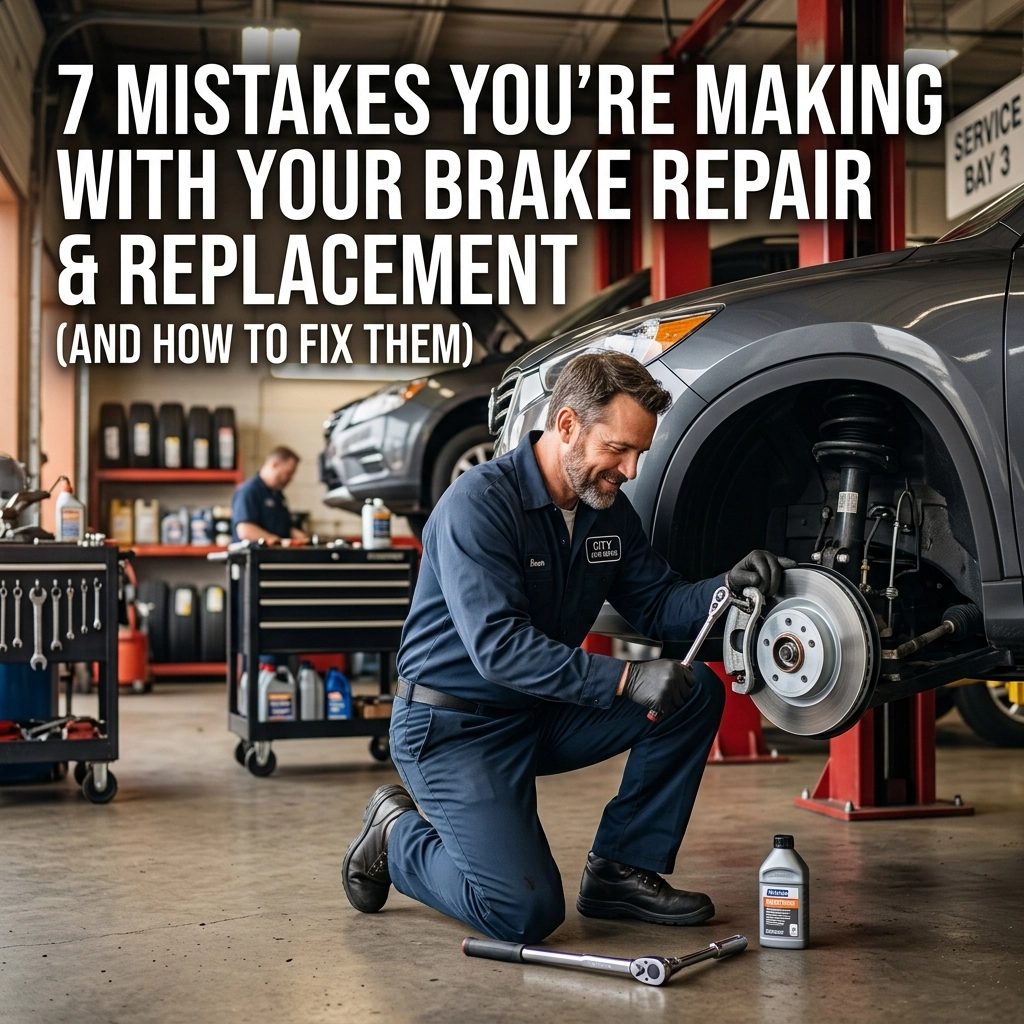
When you’re cruising down the highways around Camrose, there is one system in your vehicle that is non-negotiable: your brakes. We often focus on horsepower, fuel economy, or how shiny the paint looks after a wash, but at the end of the day, your ability to stop is what keeps you and your family safe. At Minotaur Mechanical, we see a lot of DIY projects and “quick fixes” that come through our shop doors. While we love a hands-on approach to vehicle care, brake repair and replacement is an area where small errors lead to big headaches: and even bigger repair bills. Whether you are tackling a brake job in your own garage or taking your car to a local shop, avoiding these seven common mistakes will ensure your vehicle stays reliable for miles to come. Think of your brakes as your car’s “health insurance.” A little precision now prevents a catastrophic payout later. Let’s dive into the most common blunders and, more importantly, how to fix them. 1. The “Pad Slap”: Replacing Pads but Ignoring Rotors The most common mistake we see is the “pad slap.” This happens when a driver notices their brake pads are thin and simply swaps in a new set of pads without touching the rotors. While it’s the cheapest way to get back on the road, it’s rarely the smartest. Brake rotors (the metal discs the pads clamp onto) develop wear patterns, grooves, and heat spots over time. If you put flat, new pads onto a grooved, old rotor, the pads won’t make full contact. This leads to reduced stopping power and “brake fade.” Furthermore, a warped rotor will cause a frustrating vibration in your steering wheel every time you slow down. How to Fix It: Always have your rotors inspected or measured for thickness. If they are within the manufacturer’s safety specs, they should at least be resurfaced (machined) to create a smooth “bite” for the new pads. If they are too thin or heavily rusted: which is common with our Alberta winters: replacement is the only safe bet. Proper auto repair services always include a thorough rotor check. 2. Neglecting to Lubricate Guide Pins Your brake caliper needs to slide back and forth freely to apply even pressure to the pads. This movement happens on small metal parts called guide pins. Over time, the grease on these pins dries out, or the rubber boots tear, allowing dirt and Camrose road salt to get inside. When guide pins seize up, the caliper gets stuck. This results in one pad wearing down to the metal while the other looks brand new. It also creates a “drag” on your engine, which hurts your fuel efficiency. How to Fix It: Every time you perform brake repair and replacement, you must pull the guide pins, clean off the old gunk, and apply high-quality, high-temperature silicone brake grease. Avoid using petroleum-based grease, as it can cause the rubber boots to swell and fail. 3. Hanging the Caliper by the Brake Hose When you’re working on the brakes, the heavy metal caliper has to come off to reach the pads and rotors. A common DIY mistake is letting that heavy caliper dangle by the rubber brake hose. While the hose looks sturdy, it isn’t designed to support the weight of the caliper. Hanging it this way can cause internal tears in the hose lining. You might not see the damage on the outside, but it can lead to a restricted flow of fluid (causing the brakes to stick) or a sudden hose failure under pressure. How to Fix It: Use a simple “S” hook, a piece of heavy-duty wire, or even a bungee cord to hang the caliper from the coil spring or the frame. This keeps the tension off the hose and protects the integrity of your hydraulic system. 4. Ignoring the Brake Fluid’s “Best Before” Date Brake fluid is the lifeblood of your stopping system, but it is often the most neglected fluid in the entire vehicle. Brake fluid is hygroscopic, meaning it actively absorbs moisture from the air. Over time, that water content lowers the boiling point of the fluid and causes internal corrosion in your calipers and ABS (Anti-lock Braking System) modules. If your brake pedal feels “spongy” or “mushy,” you likely have air or water in your lines. This is a major safety risk, especially during heavy braking scenarios. How to Fix It: Include a brake fluid flush as part of your general vehicle maintenance. Most manufacturers recommend a flush every two years. At Minotaur Mechanical, we use advanced diagnostics to test the moisture content of your fluid so you know exactly when it’s time for a change. 5. Buying the Absolute Cheapest Parts We get it: auto repairs can be an unexpected expense. However, the “bargain bin” brake pads are often a false economy. Cheap pads are often made of inferior friction materials that create excessive black dust, squeal like a banshee, and wear out in half the time of a quality ceramic or semi-metallic pad. Even worse, cheap rotors are more prone to “warping” under the heat of a long descent or sudden stop. You’ll end up spending more money in the long run by replacing cheap parts twice as often. How to Fix It: Invest in high-quality parts that match your driving style. If you do a lot of towing or have a heavy truck, you need heavy-duty pads. Quality parts offer “peace of mind” and better long-term value. We always recommend using OE (Original Equipment) or premium aftermarket components for any brake repair and replacement job. 6. Forgetting to Clean the New Rotors Did you know that brand-new rotors usually come coated in a thin layer of oil or wax? Manufacturers do this to prevent them from rusting while they sit in a warehouse. If you install them straight out of the box, that oil will soak into your brand-new brake pads, ruining them instantly. Contaminated pads will “glaze”
7 Suspension Repair Mistakes & How to Fix Them

If you’ve ever driven down a washboard gravel road outside of Camrose or hit one of those “surprise” potholes that seem to multiply overnight in Alberta, you know exactly how important your suspension is. It’s the difference between a smooth, confident ride and feeling like you’re trapped inside a paint mixer. At Minotaur Mechanical, we see a lot of DIY “weekend warrior” projects and budget-friendly repairs that end up costing owners a fortune in the long run. Your suspension isn’t just about comfort; it’s a complex safety system that keeps your tires on the road and your vehicle under control. Being a Red Seal-certified and AMVIC-approved shop in Camrose, we’ve seen it all: from “Frankenstein” lift kits to shocks that have been leaking since the turn of the decade. To save your spine (and your wallet), here are the seven biggest mistakes people make with vehicle suspension repair and, more importantly, how you can fix them. 1. The “Higher is Always Better” Myth We get it. A massive lift looks cool in the parking lot. But one of the most common mistakes in truck performance upgrades is lifting a vehicle too high without considering the mechanical consequences. When you push the height past what your vehicle’s geometry was designed for, you put extreme stress on your U-joints, CV axles, and steering components. You might gain ground clearance, but you lose ride quality and stability. The Fix: Don’t just pick a number out of a hat. Consider your actual needs: are you rock crawling or just want a more aggressive stance? A moderate, high-quality leveling kit or a tuned 2-to-3-inch lift often performs significantly better than a massive 6-inch budget lift. Always check local Alberta height laws and consult with a pro to ensure your driveshaft angles aren’t being pushed to the breaking point. 2. Skipping the Shocks (The “Budget” Trap) When people look at auto repair services for their suspension, they often focus on the springs or the lift blocks and try to save money by keeping their factory shocks. This is like buying a high-end gaming PC and then using a monitor from 1998. Your shocks (and struts) are what actually control the energy in your springs. If you upgrade your springs but leave old, worn-out shocks, your vehicle will bounce like a pogo stick. Worn shocks also increase your braking distance and cause your tires to “cup,” leading to premature tire replacement. The Fix: If you are replacing springs or adding a lift, upgrade your shocks at the same time. Quality shocks are an investment in your safety and comfort. If you notice your truck “diving” when you hit the brakes or “squatting” when you accelerate, it’s time for a change. 3. Mixing and Matching Components Like a Mad Scientist Suspension systems are engineered to work as a cohesive unit. A common pitfall we see is someone buying Brand A’s springs, Brand B’s control arms, and Brand C’s bushings because they found them on sale. When you mix and match parts that weren’t designed to play together, you end up with “geometry gore.” This can cause strange vibrations, rubbing, and unpredictable handling during emergency maneuvers. The Fix: Stick to engineered kits or consult a specialist who understands component compatibility. At Minotaur Mechanical, we focus on system-wide health, ensuring every bolt and bushing works in harmony to provide a predictable, safe ride. 4. Ghosting Your Wheel Alignment This is perhaps the most frequent mistake. You spend all Saturday swapping out your struts or control arms, the truck looks great, and you head out for a drive. But because you didn’t get a professional alignment afterward, your tires are now “scrubbing” against the pavement at a slight angle. Within a few hundred kilometers, those expensive all-terrains will start showing uneven wear. Any time you touch a suspension component, your alignment settings (toe, caster, and camber) change. The Fix: Schedule an alignment immediately after any vehicle suspension repair. It’s the “insurance policy” for your tires and ensures your steering wheel stays centered. 5. Treating Maintenance Like an Optional Suggestion Your suspension is full of “wear items”: bushings, ball joints, and tie rod ends: that don’t last forever. Many drivers ignore their routine car maintenance schedule until something actually snaps. In Camrose, our harsh winters and road salt act like sandpaper on these components. Neglecting small leaks or tiny squeaks eventually leads to “catastrophic failure,” which is mechanic-speak for “expensive and scary.” The Fix: Think of regular inspections as health insurance for your car. During every oil change, we check for torn boots, leaking seals, and loose joints. Catching a $100 ball joint issue now prevents a $1,000 repair later. 6. Overloading Your Vehicle (The “Pack Mule” Problem) Whether you’re hauling a trailer out to the lake or loading the bed with gravel for a backyard project, every vehicle has a Gross Vehicle Weight Rating (GVWR). Constantly maxing out your payload or towing beyond your limit crushes your springs and overheats your shocks. Overloading doesn’t just wear out parts; it changes how your vehicle handles. An overloaded rear end lifts the front tires, reducing your ability to steer and brake effectively. The Fix: Know your limits. If you consistently haul heavy loads, consider fleet-grade upgrades like heavy-duty leaf springs or air helper bags. This protects your primary suspension and keeps your vehicle level and safe. 7. Ignoring the “Warning Whispers” Your car is actually pretty good at telling you when it’s unhappy. You just have to listen. Common warning signs include: The “Clunk”: Usually a loose bushing or end link. The “Sway”: Your vehicle feels like a boat in high winds (worn shocks). The “Lean”: One corner sits lower than the others (broken spring). The “Pull”: The vehicle drifts to one side even on a flat road. The Fix: Don’t just turn up the radio to drown out the noise. If something feels off, bring it in for a car diagnostic test. Using our advanced diagnostic tools, we can pinpoint exactly
When to Replace Your Vehicle’s Belts and Hoses

If there’s one part of your vehicle that often goes unnoticed—until something goes wrong—it’s the belts and hoses. These components might not seem like much compared to an engine or a transmission, but they’re essential to how your car functions. Whether you’re driving across Camrose in the dead of winter or cruising in the summer heat, belts and hoses are quietly working under the hood to keep your engine cool, your alternator charging, and your ride running smoothly. At Minotaur Mechanical, we’ve seen firsthand how much damage a worn-out serpentine belt or cracked radiator hose can cause. And we’re here to help you understand when to replace your vehicle’s belts and hoses before you’re stranded on the side of the road. Why Belts and Hoses Matter Let’s break it down. Belts—like the serpentine belt or timing belt—transfer power from your engine to critical components such as your alternator, water pump, power steering pump, and A/C compressor. Without them, your vehicle simply won’t run. Hoses carry fluids such as coolant, transmission fluid, and brake fluid throughout your vehicle. These fluids are necessary to regulate temperature, assist in braking, and lubricate moving parts. Both belts and hoses are made from materials like rubber and synthetic compounds that degrade over time due to heat, friction, and age. Once they begin to crack, stretch, or leak, it’s only a matter of time before they fail completely. How Long Do Belts and Hoses Last? There’s no universal expiration date, but there are general guidelines: Serpentine belts: Typically last between 90,000 to 160,000 km (about 55,000 to 100,000 miles), depending on driving habits and weather conditions. Timing belts: Usually need replacement every 100,000 to 160,000 km. If your vehicle has a timing chain instead, it may last longer—but it’s still wise to have it inspected regularly. Radiator and heater hoses: Generally last about 5 years, but extreme climates or heavy driving conditions (like towing or lots of idling) can shorten their lifespan. Living in Camrose, where temperatures swing between extremes, your vehicle belts and hoses may wear faster than the average. Regular inspections are key. Warning Signs to Watch For A belt or hose doesn’t always give a clear warning before it fails—but here are some signs that it might be time to schedule a check-up: Belts: Squealing or chirping noise when you start the engine or turn the wheel Power loss in your A/C or steering Visible cracks, fraying, or glazing on the belt Engine overheating, which could mean the water pump isn’t functioning Hoses: Coolant puddles under your car Steam from under the hood Low fluid levels without an obvious explanation Visible bulges, cracks, or leaks in the hoses Overheating engine, often caused by a coolant leak If you spot any of these symptoms, don’t wait. Even something as small as a pinhole leak can lead to major engine damage if ignored. Preventive Inspections: Your Best Defense Here at Minotaur Mechanical, we believe that preventive care is the most affordable form of auto maintenance. Catching a soft hose or brittle serpentine belt before it breaks can save you from a costly tow or engine repair. As part of our general maintenance services, our Red Seal-certified technicians inspect belts and hoses during routine oil changes or brake repairs. We check for: Tension and alignment on serpentine belts Cracks, brittleness, or wear in rubber materials Swelling or leaking connections on hoses Corrosion on metal fittings Signs of coolant or oil contamination This level of detail is part of what sets us apart. We treat every vehicle like it’s our own—because your safety, your time, and your money matter. Timing Belts: The Silent Risk Let’s talk about one of the most critical belt replacements—your timing belt. This belt keeps your engine’s valves and pistons moving in sync. If it fails, the engine could suffer catastrophic internal damage. There’s no screech or warning with timing belts—they often fail silently. That’s why manufacturers set strict replacement intervals, and why timing belt replacement should always be taken seriously. At Minotaur Mechanical, we use high-quality OEM or better components for all belt replacements. Whether it’s a timing belt, serpentine belt, or tensioner, we never cut corners—because one skipped step can lead to an engine rebuild. The Role of Climate in Belt and Hose Lifespan Camrose drivers know that Alberta’s seasons can be tough on vehicles. Between sub-zero winters and summer heatwaves, your belts and hoses go through thermal expansion, contraction, and constant exposure to engine heat. In cold weather, rubber becomes brittle and more prone to cracking. In summer, hoses can soften and swell under pressure. That’s why seasonal inspections are so important in our region. Don’t just wait for a breakdown—get ahead of it. At Minotaur Mechanical, we offer comprehensive inspections designed specifically for Canadian driving conditions. We know what your car’s up against, and we’re ready to help you stay ahead of wear and tear. Diesel Drivers: Don’t Skip Belt & Hose Checks Driving a diesel? Great choice for durability and power—but don’t overlook the basics. Diesel engines often use heavy-duty belts and larger hoses due to higher temperatures and load capacity. That means more stress and more need for regular inspections. Whether you’re towing, hauling, or running a tuned diesel, our expert diesel engine service team in Camrose will make sure your belts and hoses can keep up with your performance needs. We’re not just fixing problems—we’re building reliability, one component at a time. Can You Check Belts and Hoses Yourself? Sure, you can take a look under the hood. If you’re comfortable doing it, here’s what to check: Squeeze the hoses: They should feel firm but not rock-hard or spongy. Look for leaks or shiny spots on the hoses. Inspect the belts: They should have consistent thickness, no cracking, and be tight—but not overly so. Listen: If your engine’s squealing, the belt might be slipping or worn. But keep in mind, visual checks won’t catch everything. Internal hose damage, microscopic cracks, or poor belt tension are